Unified Security Telemetry
Unified Security Telemetry is the foundational data engine powering Sath’s upcoming SIEM and XDR platform. Designed to consolidate security signals, eliminate alert noise, and accelerate automated response, this cloud-native layer closes the dangerous gap between detection and remediation. Stop chasing isolated alerts and start neutralizing real threats with complete, cross-environment visibility.
Overcoming the Crisis of Signal in Security Operations
Security operations teams are drowning in a measurable crisis of signal. Industry research consistently shows that enterprise SOC analysts face thousands of alerts daily, with the vast majority abandoned to manual triage bottlenecks. More critically, up to 80 percent of these alerts are false positives generated by siloed tools lacking cross-environment context. Legacy architectures exacerbate this issue by forcing security leadership to make impossible choices. Handcuffed by unpredictable, ingestion-volume-based pricing models, organizations are routinely forced to drop critical telemetry just to contain costs, creating massive visibility gaps across their cloud and identity landscapes.
Sath is building its upcoming SIEM and XDR platform to dismantle these systemic failures. Serving as the foundational data engine for this offering, the Unified Security Telemetry layer is designed to ingest, normalize, and enrich data across your entire hybrid environment before it ever reaches the analyst queue. By decoupling compute from storage and natively integrating identity-layer telemetry from systems like IDHub, we are engineering a unified, high-fidelity workspace. Our objective is to eliminate alert noise, automate repeatable response workflows, and empower your analysts to focus on true-positive threat investigation without budget-driven data compromises.
Architected for Enterprise Scale and Precision
Omni-Source Telemetry Ingestion at Scale
Engineered to simultaneously aggregate and normalize high-velocity security data across hybrid and cloud-native environments without requiring brittle custom pipelines.
Collects structured and unstructured data from diverse enterprise architectures seamlessly.
Planned agent-based and agentless collection methods to support rapid deployment.
Eliminates architectural blind spots across endpoint, network, and cloud workloads.
Ingests telemetry natively from third-party SaaS and major identity providers.
Designed to field-standardize and enrich raw data immediately upon ingestion.
Built to scale effortlessly and reliably as enterprise telemetry volumes grow.
Behavioral Threat Detection and UEBA [Planned]
The platform is being built to deploy advanced machine learning models that establish dynamic, cryptographic-level behavioral baselines to uncover stealthy insider and persistent threats.
Designed to continuously monitor users, devices, and service accounts for anomalous activity.
Aims to identify privilege escalation and lateral movement without relying on static signatures.
Intended to build dynamic behavioral baselines that adapt to your specific environment over time.
Built to uncover sophisticated insider threat patterns that easily evade traditional perimeter defenses.
Planned integration with all telemetry streams for highly accurate, real-time behavioral risk scoring.
Engineered to drastically reduce false positives by analyzing user context rather than isolated events.
Deterministic Cross-Source Correlation
Designed to evaluate events against a continuously updated detection rule library across multiple data streams simultaneously, fusing isolated signals into coherent attack narratives.
Analyzes multi-source data streams in real time to uncover complex, multi-stage attack chains.
Intended to automatically map all prioritized detections directly to the MITRE ATT&CK framework.
Grants analysts immediate, structured tactical context for every surfaced threat in the queue.
Suppresses low-fidelity duplicate alerts to drastically reduce analyst fatigue and alert noise.
Correlates identity, endpoint, and network telemetry into a single, unified incident lifecycle.
Designed to ensure high-priority detections reach analysts pre-enriched with actionable intelligence.
Unified Contextual Investigation Workspace [Planned]
A planned investigation console engineered to aggregate alert timelines, asset criticality, user activity, and threat intelligence into a single, comprehensive pane of glass.
Designed to completely eradicate the need to pivot across disconnected security tools during triage.
Aims to drastically reduce Mean Time to Investigate (MTTI) through consolidated data visibility.
Intended to present full attack lifecycles and historical context natively within the analyst workflow.
Built to surface pre-enriched asset criticality and deep identity context instantly.
Planned to offer a seamless operational transition from rapid alert triage to deep forensic analysis.
Engineered to empower analysts with unified, timeline-based evidence rather than fragmented logs.
Automated Remediation and SOAR Playbooks [Planned]
Intended to embed highly customizable SOAR playbooks designed to automate repeatable incident response actions and compress the remediation window from hours to seconds.
Designed to execute machine-speed automated response actions to instantly contain active threats.
Planned playbooks for dynamic account suspension and immediate, network-level host isolation.
Aims to support automated firewall rule updates and complex stakeholder notification workflows.
Intended to provide immutable execution audit trails for strict regulatory compliance documentation.
Built to allow customizable analyst approval gates before executing high-impact network actions.
Engineered to eliminate manual, error-prone remediation steps during high-stress critical incidents.
Decoupled Storage Architecture
Architected to separate compute from storage, allowing query performance to remain highly responsive even as enterprise telemetry scales into the petabytes.
Designed to balance lightning-fast query performance with highly cost-efficient, long-term archiving.
Planned tiered storage (hot, warm, and cold) for highly flexible and predictable data lifecycle management.
Engineered to ensure rapid data retrieval during active threat hunting and complex historical investigations.
Built to support strict long-term compliance retention without forcing infrastructure over-provisioning.
Eliminates the severe query lag typically associated with legacy, coupled SIEM database architectures.
Allows organizations to scale their storage footprint and compute power independently based on operational needs.
The Telemetry Lifecycle: From Raw Signal to Remediated Threat
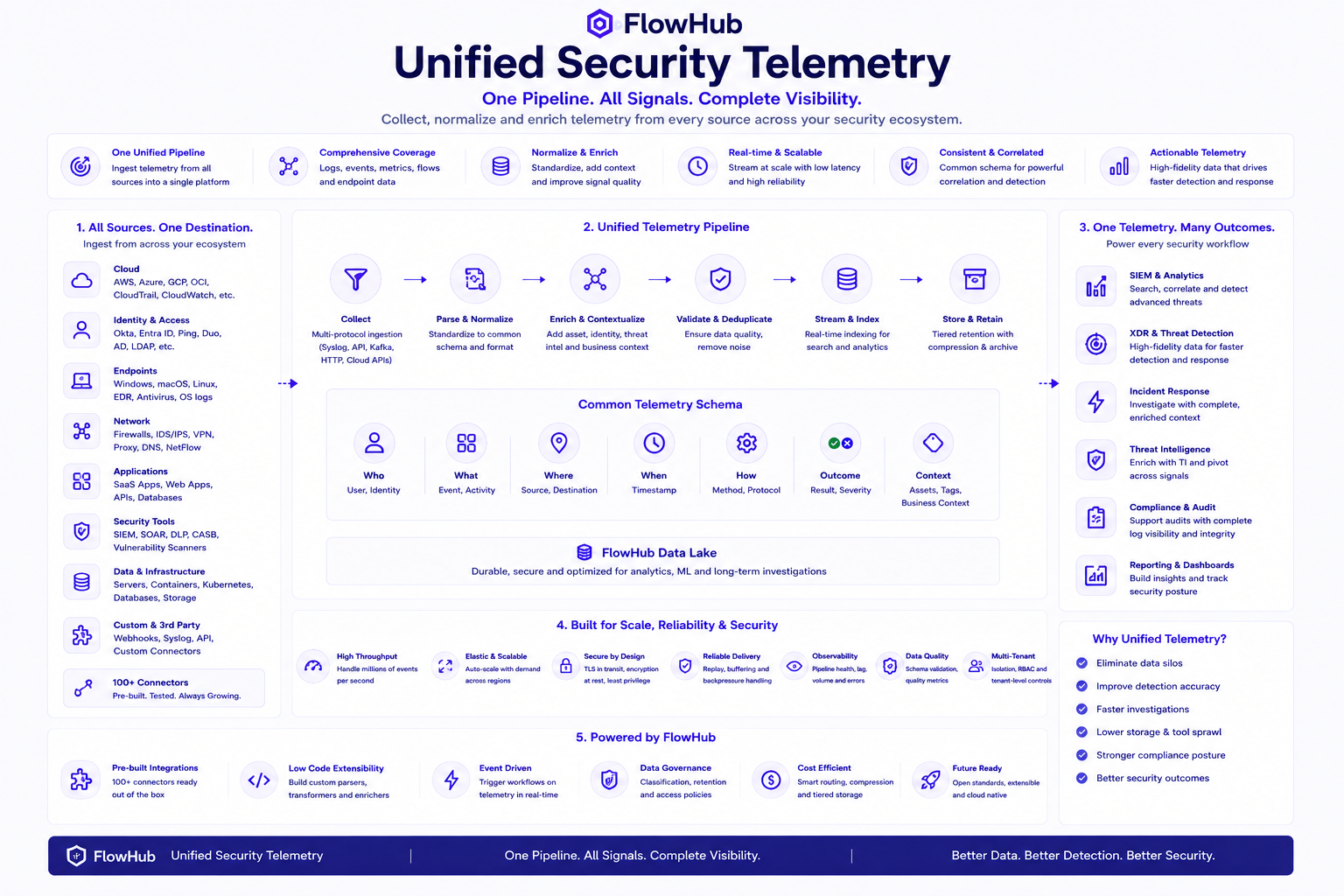
Step 1: Collect Deploying a mix of planned agent-based and agentless collectors, the engine is designed to seamlessly gather critical security telemetry from endpoints, cloud control planes, network perimeters, third-party SaaS applications, and identity systems (including Sath IDHub) in near real time, eliminating architectural blind spots.
Step 2: Ingest & Normalize Raw telemetry from fundamentally diverse architectures is designed to be parsed, field-standardized, and mapped to a unified schema immediately upon ingest. This ensures that downstream correlation rules and human analysts are always operating on a clean, normalized, and highly enriched dataset.
Step 3: Detect & Enrich Normalized events are evaluated simultaneously by the correlation engine, planned behavioral models, and integrated threat intelligence feeds. Prioritized detections are intended to surface pre-enriched with asset criticality and identity context, bypassing the manual data-gathering phase of legacy incident response.
Step 4: Investigate & Respond High-fidelity detections surface in the planned contextual investigation console for timeline analysis. Simultaneously, planned SOAR playbooks are intended to execute machine-speed automated response actions to contain active threats, compressing the remediation window from hours to seconds.
Delivering Tangible ROI for the C-Suite and SOC Leadership
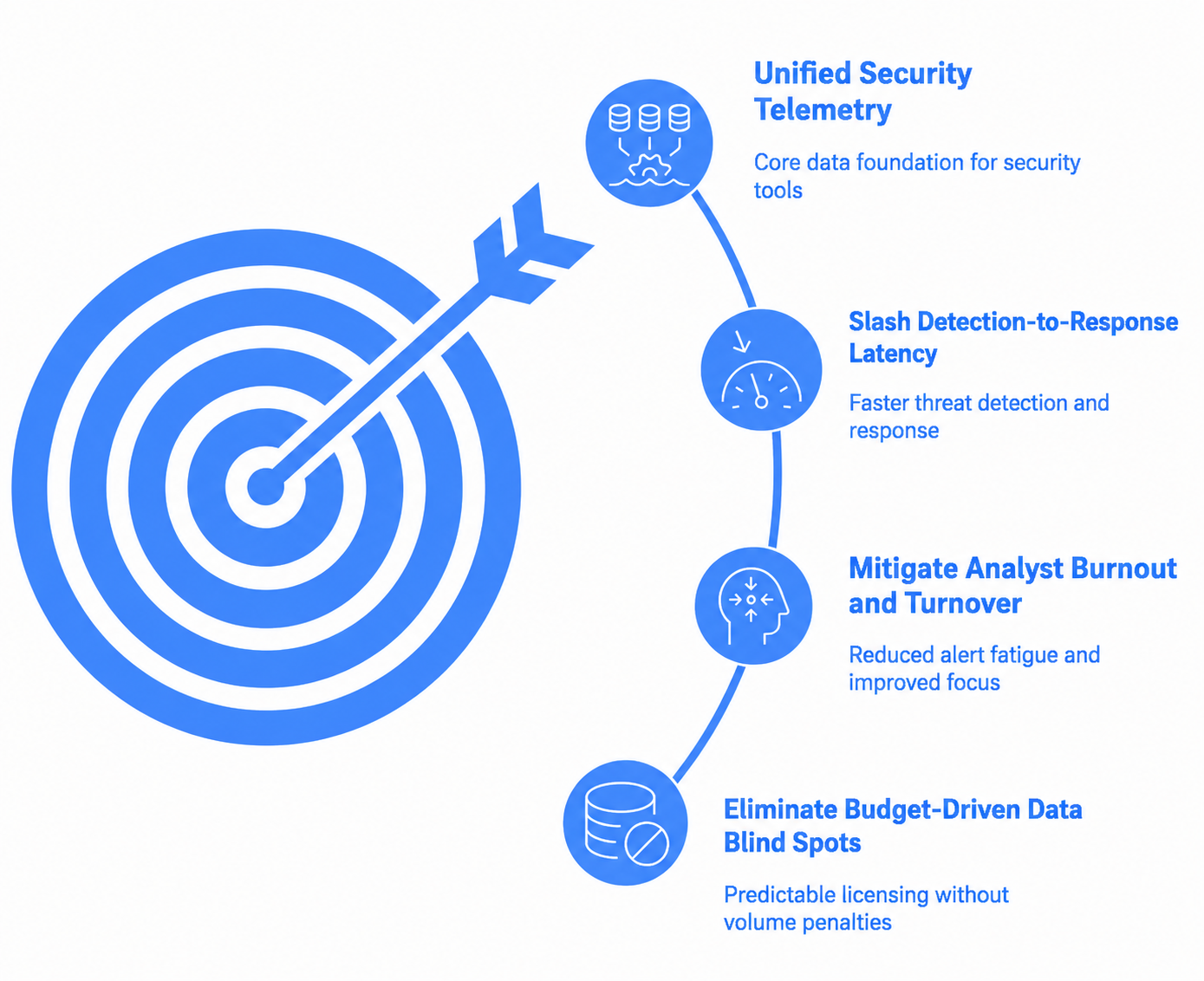
- Slash Detection-to-Response Latency: Designed to correlate telemetry across the entire environment in real time, targeting a measurable reduction in attacker dwell time by ensuring high-priority detections reach analysts with full, actionable context.
- Consolidate Vendor Sprawl and Reduce TCO: By engineering Unified Security Telemetry as the data foundation for integrated SIEM, XDR, UEBA, and planned SOAR capabilities, Sath intends to drastically reduce the integration overhead, infrastructure costs, and licensing complexity of maintaining fragmented security stacks.
- Mitigate Analyst Burnout and Turnover: Built to address alert fatigue directly at the ingestion and detection layers, suppressing false positives and automating tier-one triage so SOC teams can focus their highly specialized talent on genuine threat hunting and forensic analysis.
- Eliminate Budget-Driven Data Blind Spots: Sath intends to offer a predictable licensing model that completely circumvents the traditional ingestion-volume penalties, removing the dangerous budget trade-off between full-spectrum data visibility and strict fiscal constraint.
Ecosystem Interoperability: Connecting the Enterprise Stack
Sath’s upcoming SIEM and XDR offering is being designed to integrate seamlessly with the mission-critical infrastructure your enterprise already relies on. Planned native connectors and a fully documented REST API are intended to enable frictionless deployment into existing security architectures.
[Note: As this product is under active development, the following represents planned and typical enterprise integration targets designed to guide your architectural planning.]
- Cloud Infrastructure (Planned): AWS, Microsoft Azure (Activity Logs, Defender), Google Cloud Platform
- Endpoint Detection & Response (Planned): CrowdStrike Falcon, SentinelOne, Microsoft Defender for Endpoint, Palo Alto Cortex XDR
- Identity & Access Management: IDHub (Native integration), Okta, Microsoft Entra ID, Ping Identity
- Network & Perimeter (Planned): Palo Alto Networks NGFW, Fortinet, Cisco Meraki, Zscaler
- ITSM & Collaboration (Planned): ServiceNow (bi-directional sync), Jira, PagerDuty, Slack, Microsoft Teams
- Threat Intelligence (Planned): MITRE ATT&CK natively mapped, STIX/TAXII feeds, open-standard TI ingestion
Architected for Stringent Regulatory Mandates
Designed to support compliance with rigorous global frameworks such as SOC 2 Type II, ISO 27001, PCI-DSS 4.0, HIPAA, GDPR, NIST CSF 2.0, and DORA, Sath’s SIEM and XDR platform is intended to feature pre-built report templates, immutable audit trails, and auditor-ready executive dashboards. Log retention policies are planned to be deeply configurable per data source and jurisdiction. This ensures your organization can effortlessly meet strict data residency requirements and expanding SEC disclosure mandates without being forced into costly infrastructure over-provisioning. Following we have discussed some typical use cases.
Use Cases
Use Case 1: SOC Operations — Consolidating a Fragmented Alert Stack
Enterprise SOCs running disparate SIEM, EDR, and network tools suffer from chronic alert fatigue and critical investigation blind spots. Sath’s telemetry engine is designed to fuse this multi-source data into a single normalized pipeline, suppress low-fidelity duplicates via cross-source correlation, and surface only high-confidence, pre-enriched detections to keep analysts focused on genuine intrusions.
Use Case 2: Cloud Security — Visibility Across Multi-Cloud Environments
Organizations aggressively scaling across AWS and Azure frequently outpace the visibility of their legacy on-premises infrastructure. Sath is designed to simultaneously ingest cloud control-plane logs, identity events, and endpoint telemetry. This allows the planned UEBA models to reliably pinpoint compromised cloud service accounts and cross-environment lateral movement that traditional perimeter defenses miss.
Use Case 3: Threat Hunting — Shifting from Reactive to Proactive Operations
Mature security organizations possess the talent for proactive threat hunting but lack the unified data architecture to execute it efficiently. The planned threat hunting workbench is designed to provide instantaneous, full-fidelity log access across the entire retention window. Armed with MITRE ATT&CK-aligned hypothesis templates, engineers can quickly transform successful hunt findings into persistent, automated detection rules.
Transparent Economics Built for Enterprise Scale
Sath intends to structure SIEM and XDR licensing around your specific architectural scale and deployment requirements entirely circumventing the predatory ingestion-volume pricing models that cripple legacy security budgets.
Trust Reassurance
Sath brings more than two decades of elite enterprise security and identity management experience to every engagement. Fortune 500 organizations across highly regulated sectors trust Sath to architect, deploy, and support security programs that withstand the most rigorous compliance audits and operational demands.